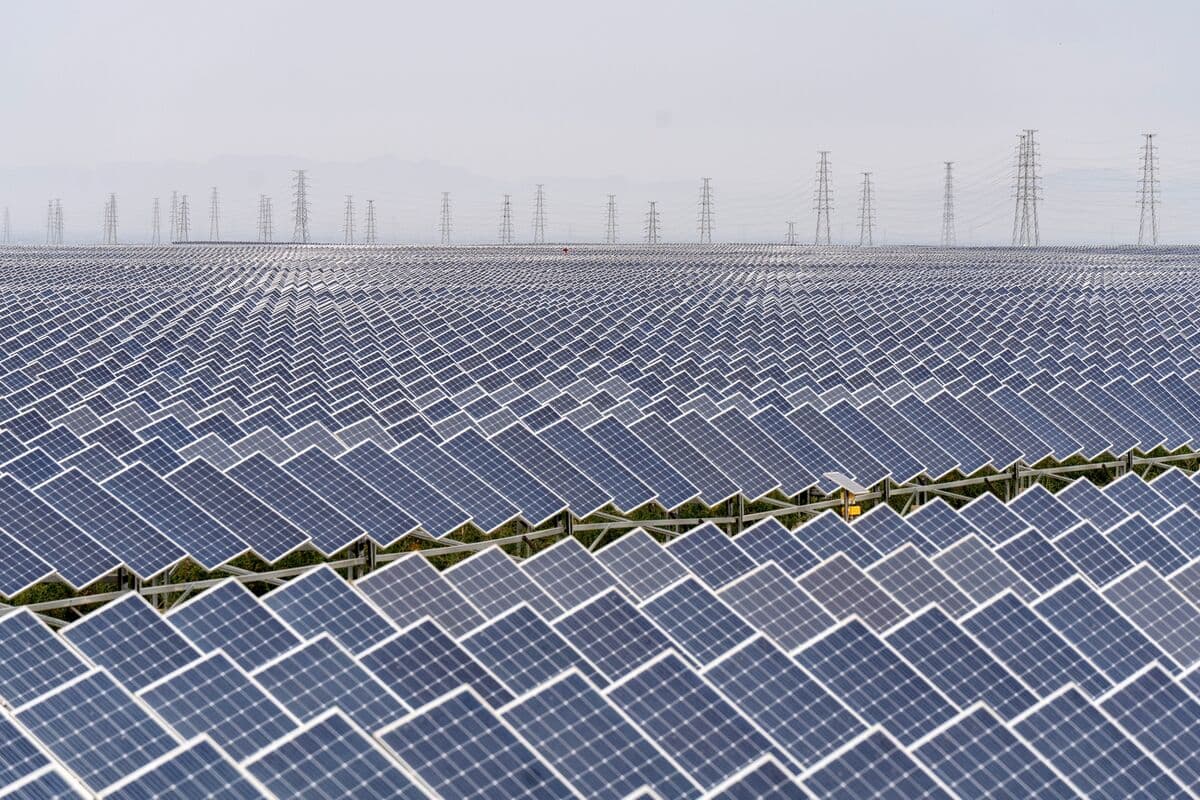
Photo via Bloomberg Markets
China's massive solar manufacturing sector is confronting a crisis it has long struggled to address: too much production capacity chasing too few profitable outlets. According to Bloomberg Markets, the industry's persistent overcapacity has eroded margins and forced manufacturers to seek new revenue streams beyond traditional panel production. This structural challenge is reshaping how Chinese solar companies compete globally and what that means for American energy markets.
For Austin's growing renewable energy sector, including companies involved in solar installation, grid technology, and energy storage, China's pivot warrants close attention. As Chinese manufacturers diversify into adjacent areas—storage systems, smart grid solutions, and integrated energy platforms—they may increase competition in markets where Austin-based firms have staked claims. Local solar and cleantech companies should monitor how these shifts affect supply chains, pricing, and technology standards.
Texas has positioned itself as a renewable energy hub, with Austin playing a central role in cleantech innovation and deployment. The state's competitive advantages in wind and solar development could be affected if Chinese overcapacity drives down global equipment prices or if Chinese firms aggressively enter downstream services. However, local companies' expertise in grid integration and demand management—areas requiring deep understanding of Texas's unique energy landscape—provide defensible competitive advantages.
Business leaders in Austin's energy sector should view China's industry consolidation as a signal to strengthen differentiation through technology innovation, customer relationships, and specialized services. Whether through energy storage integration, AI-powered efficiency solutions, or grid resilience tools, Austin's renewable energy companies have opportunities to compete on value rather than commodity pricing. Staying ahead of these global trends will be essential for maintaining growth momentum in an increasingly dynamic clean energy market.