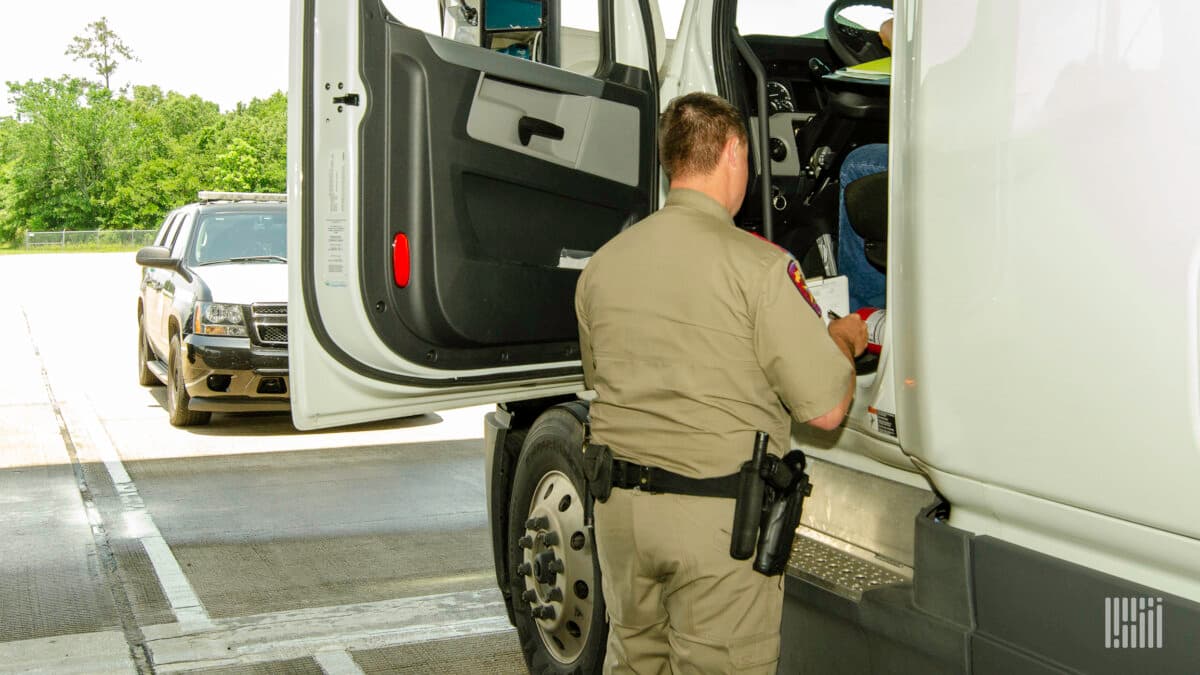
Photo via FreightWaves
The trucking industry is entering a new enforcement era where digital infrastructure is replacing traditional compliance methods. According to FreightWaves, roadside camera networks and license plate readers are now capable of reconstructing detailed multi-state trips in real time, allowing officers to verify driver logs with unprecedented accuracy. This technological shift represents a fundamental change in how regulatory agencies monitor Hours of Service (HOS) violations and other compliance issues across state lines.
For Austin-area logistics companies and owner-operators, this development carries significant operational implications. The ability to cross-reference actual vehicle movements against paper or electronic logs means that discrepancies—whether intentional or accidental—are far more likely to be detected. Fleets that operate across multiple states, particularly those moving freight through Texas and into neighboring regions, will need to ensure their documentation systems are bulletproof and their driver training emphasizes strict HOS compliance.
The technology behind this enforcement shift includes sophisticated license plate recognition systems and fixed roadside cameras that create a continuous digital trail of vehicle movements. When a driver enters a scale house, enforcement officers can now pull up a complete timeline of the vehicle's journey, cross-referencing it against submitted logs. This level of transparency eliminates the gray area that previously existed in compliance disputes and makes falsifying records significantly riskier.
Austin-based transportation and logistics companies should view this shift as an opportunity to differentiate themselves through compliance excellence. Investing in electronic logging devices (ELDs), driver training programs, and transparent record-keeping practices not only ensures regulatory compliance but also builds reputation and trust in an increasingly scrutinized industry. As enforcement technology continues to advance, proactive compliance strategies will become a competitive advantage for logistics operations in the region.