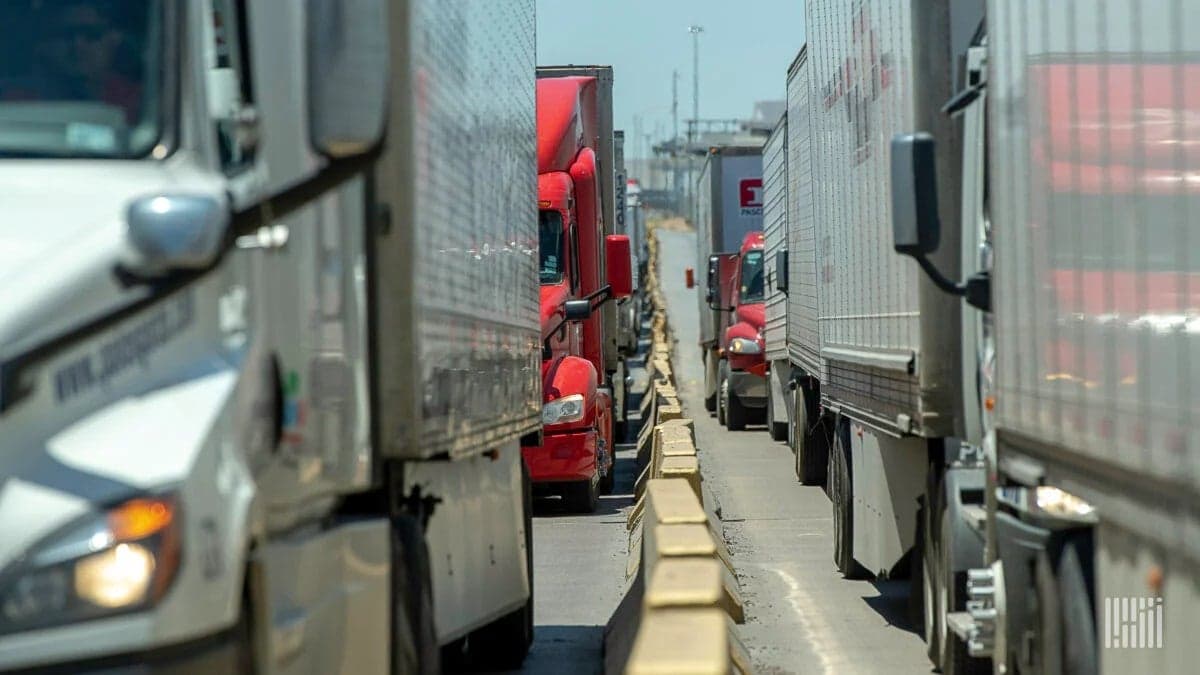
Photo via FreightWaves
U.S. Border Patrol has intensified enforcement efforts targeting commercial vehicle operators, according to FreightWaves. During a recent five-day operation in Arizona, federal agents arrested 36 truck drivers, signaling a broader crackdown on transportation industry compliance with immigration and licensing requirements.
The operation underscores growing federal focus on the logistics and trucking sector, where documentation verification is becoming a critical compliance issue. For Austin-area transportation and supply chain companies, the enforcement action serves as a reminder that regulatory requirements around driver eligibility and licensing standards are receiving heightened attention from federal agencies.
The arrests reflect a shift toward more rigorous vetting of commercial drivers, potentially affecting hiring practices and operational procedures across the trucking industry. Companies in the Austin region that rely on freight transportation or employ commercial drivers may need to review their compliance protocols and documentation procedures to ensure they meet current federal standards.
As enforcement operations continue, logistics firms and transportation companies should consider consulting with legal and HR professionals to ensure their driver verification processes align with federal requirements. The increased scrutiny may also create competitive advantages for companies that maintain robust compliance frameworks and transparent hiring practices.