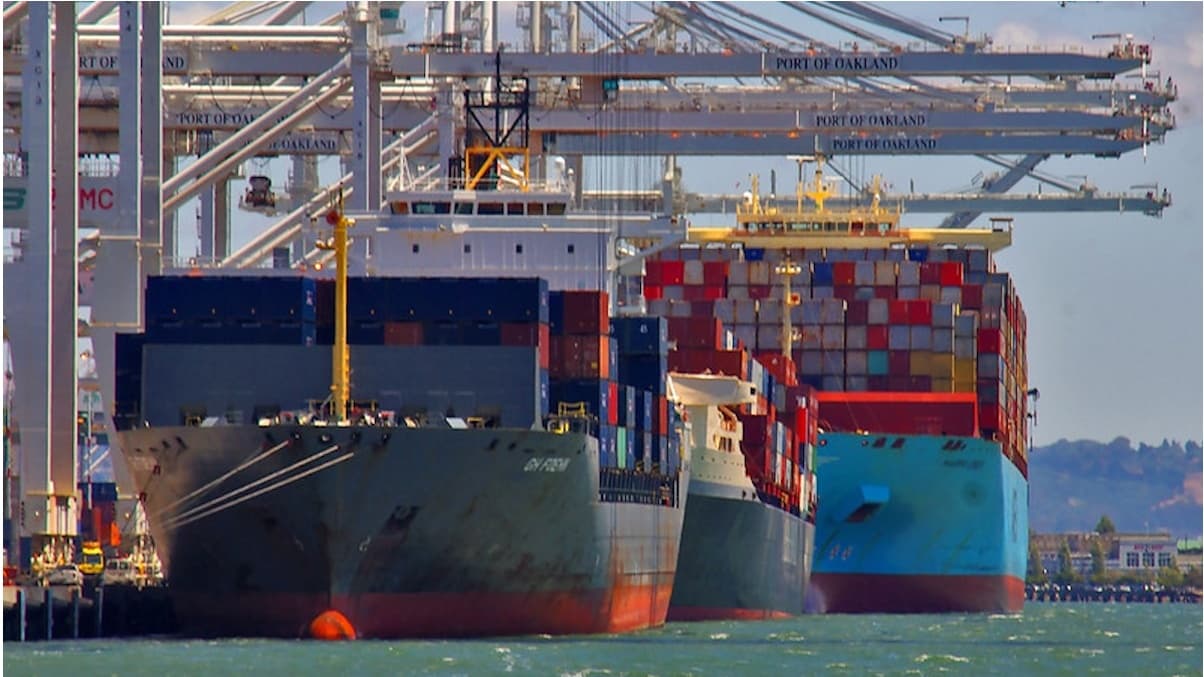
Photo via FreightWaves
According to FreightWaves, the Port of Oakland maintained relatively flat cargo volumes in April compared to the same period last year, even as the number of vessel calls declined. The stability in throughput despite reduced port calls suggests improved operational efficiency and potentially larger cargo loads per vessel, a trend worth monitoring for Texas businesses relying on West Coast shipping infrastructure.
Austin-based companies with Pacific supply chains—particularly in technology, manufacturing, and retail—should note that West Coast port activity remains a critical barometer for import-export dynamics. The Port of Oakland, as one of the nation's largest container facilities, directly impacts pricing and availability of goods flowing to Central Texas distribution centers and end consumers.
The April data reveals that exports are outpacing imports through Oakland, signaling strong demand for U.S. goods abroad. This trend could benefit Austin-area exporters and manufacturers seeking to move products to Asian and international markets, though it may also suggest tighter inbound inventory flows that could affect local retailers and importers.
As supply chain managers continue adjusting to post-pandemic volatility, the Oakland Port's performance underscores the importance of diversified logistics strategies. Austin businesses should monitor West Coast port metrics alongside labor conditions, vessel scheduling, and rate fluctuations to optimize their international trade operations and manage costs effectively.